Ceiling Leak Water Damage in O'Fallon, MO
A stain or a sag in the ceiling means water is sitting on the drywall from above. The restoration team finds the source, opens the ceiling safely and dries the joists and subfloor above it.
(888) 603-7319Get the O'Fallon ceiling dried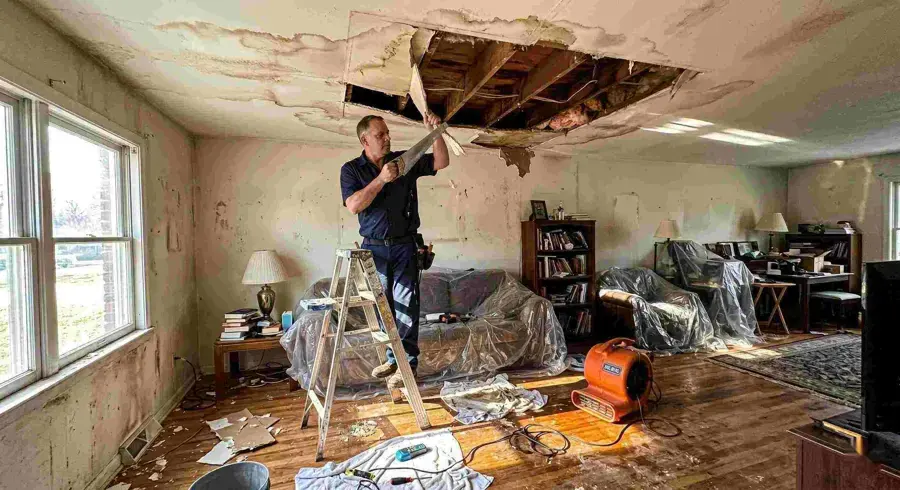
What to do first about ceiling leak water damage in O'Fallon
- Stay out from under a sag
A bulging ceiling can come down with a lot of water.
- Turn off the circuit
Switch off lights and fans near the wet area at the panel, if the panel is dry.
- Shut off the fixture above
Close the toilet or sink valve, or the main if you cannot find the source.
- Put down a bucket and photograph it
Catch the drip and photograph the stain and any sagging.
What does ceiling leak water damage cost in O'Fallon, MO?
In O'Fallon, MO, ceiling leak water damage typically runs $900 to $6,000, depending on the size of the wet area, whether the ceiling had to be opened and how far the water spread.
Small stain
- Source traced
- Small ceiling opening
- Drying and readings
Ceiling opened
- Drywall and insulation removed
- Joists dried
- Floor below dried
Spread across rooms
- Several ceiling sections
- Flooring below affected
- Full structural drying
These are typical ranges, not a quote. The drivers are the water category, the square footage, the material class and how fast drying started. For a closer planning number, try the water damage cost calculator.
How ceiling leak water damage is handled in O'Fallon, MO
Trace the water
Thermal imaging follows the water back to its source.
Drain and open
The ceiling is drained safely and wet drywall removed.
Remove insulation
Soaked insulation comes out so the joists can dry.
Dry the framing
Air movers and a dehumidifier run until the joists reach the drying goal.
Ceiling leak calls in O'Fallon usually come from inside the house: a toilet wax ring, a tub drain, a shower pan or a supply line in the floor above. Two-story houses with second-floor laundry rooms, common in newer WingHaven and Highway N subdivisions, add washer hoses to that list.
Finding the source
Water travels along joists and pipes before it drips, so the stain is not always under the leak. The tech who does the walkthrough uses thermal imaging to follow the cold, wet path back to the source, and a plumber repairs it. If the water is coming from the roof or the attic instead, the job moves to roof leak water damage.
- Toilet wax rings and supply connectors
- Tub and shower drains and failed grout or caulk
- Washer hoses in second-floor laundry rooms
- Supply lines running through the floor system
Opening and drying the ceiling
A ceiling bulging with water is drained in a controlled way before it falls. The mitigation team cuts out the wet drywall, removes soaked insulation and exposes the joists and the underside of the subfloor. Air movers and a dehumidifier then dry the cavity, and readings are taken each day on the joists, not just the room air.
Trade fact: water sitting on a ceiling near a light fixture or fan is an electrical hazard. The circuit is switched off at the panel before anyone works under it.
Repairs and the claim
Once the framing reaches the drying goal, the ceiling can be hung, taped and painted. Photos of the stain, the source and the opened ceiling go into the claim file. The EPA WaterSense leak checks show how to check toilets and fixtures for slow leaks, and the Missouri Department of Commerce and Insurance explains the claim process in Missouri. For a leak from a pipe inside the wall, see burst pipe cleanup.
Ceiling Leak Water Damage questions in O'Fallon, MO
Is a small ceiling stain an emergency?
A small dry stain is not urgent, but a growing or damp one means water is still coming. Wet drywall can sag and fall, so it is worth having it checked.
Does the whole ceiling have to be replaced?
Usually only the wet section. Crews cut out the damaged area and the drywall around it where readings show moisture.
How can water be in the ceiling if nothing is leaking now?
A toilet or tub drain may only leak when it is used, so the stain grows in steps.
Is ceiling leak damage covered by insurance?
A sudden leak is often treated differently from a slow, long-term one. Coverage depends on your policy, so it is worth checking with your own insurer.
How long does a ceiling take to dry?
Once it is opened, the joists usually dry in two to four days.
Can I paint over a water stain?
Only after the source is fixed and the drywall is confirmed dry. Painting over a wet stain traps the moisture.
Ceiling leak water damage across O'Fallon, MO
The O'Fallon restoration crew handles ceiling leak water damage in Old Town, WingHaven, Copperfield and the Highway K, Highway N and Bryan Road corridors, ZIP codes 63366 and 63368, with St. Peters, Dardenne Prairie, Lake Saint Louis, Wentzville, Cottleville, St. Paul, Weldon Spring and St. Charles close by.
Water damage in O'Fallon right now?
The restoration team extracts standing water, dries the structure to the IICRC S500 standard and documents every step for your insurance claim.