Water Extraction & Removal in O'Fallon, MO
Every dry-out starts with getting the water out of the building. The extraction crew pulls standing water with truck-mounted equipment so the drying that follows can actually work.
(888) 603-7319Start O'Fallon water removal now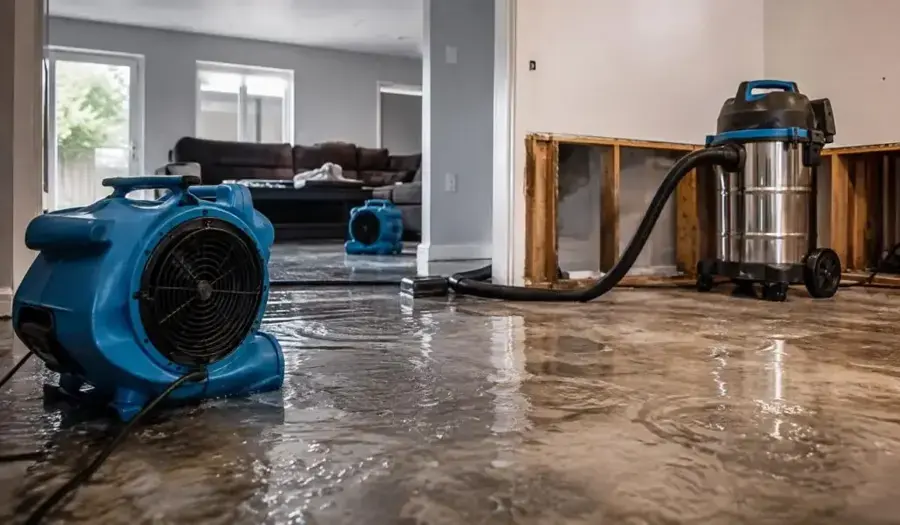
What to do first about water extraction in O'Fallon
- Stay safe around power
Stay out of standing water near outlets or cords until the power to that area is off.
- Stop the water
Shut off the main valve or the fixture valve if a supply line is leaking.
- Photograph it
Take photos and short videos of the water before cleanup starts.
- Call for extraction
The sooner the water comes out, the more carpet, pad and drywall can be saved.
What does water extraction cost in O'Fallon, MO?
In O'Fallon, MO, water extraction typically runs $500 to $4,500, depending on how much water there is, the square footage and whether carpet and pad are involved. Drying is usually priced alongside it.
One room
- Hard floor or carpet
- Portable extraction
- Moisture check after
Several rooms or a basement
- Truck-mounted extraction
- Carpet and pad extracted
- Drying set up
Deep or dirty water
- Pumps for standing water
- Category 2 or 3 handling
- Protective equipment
These are typical ranges, not a quote. The drivers are the water category, the square footage, the material class and how fast drying started. For a closer planning number, try the water damage cost calculator.
How water extraction is handled in O'Fallon, MO
Measure
The wet area is mapped with pinless meters and thermal imaging.
Extract
Truck-mounted units and pumps pull the standing water.
Squeeze soft goods
Weighted tools pull water from carpet and pad.
Hand off to drying
Air movers and LGR dehumidifiers go in on the mapped areas.
Water that is pulled out as a liquid does not have to be evaporated later. That is why extraction is the first and most important step on every loss, from a washer hose in a WingHaven laundry room to a flooded basement near Dardenne Creek.
What extraction removes
- Standing water on basement slabs, tile, vinyl and hardwood
- Water held in carpet and pad, pulled with weighted extraction tools
- Water under cabinets and along baseboards, reached with smaller wands
- Water in crawl spaces and low spots, removed with submersible pumps
How the extraction crew works a loss
The tech who does the walkthrough maps the wet area first with meters, so the extraction covers the water you cannot see as well as the puddle you can. Truck-mounted units, where the truck can get close, carry the water straight out to the tank. Inside tight basements or upper floors, portable extractors and pumps take over. Only after the extraction crew is done do the air movers and LGR dehumidifiers go in.
Trade fact: a thorough extraction can remove far more water in an hour than dehumidifiers pull out in a day, which is why skipping it adds days to the dry-out.
What happens next
Extraction is followed by structural drying, with daily readings until the materials reach the drying goal. For a basement, see basement flooding cleanup. The Ready.gov flood safety page covers safety around floodwater, and the EPA moisture and mold guidance explains why drying within 24 to 48 hours matters.
Water Extraction and Removal questions in O'Fallon, MO
Why not just use a shop vacuum?
A shop vacuum removes surface water, but it cannot pull water out of carpet pad or keep up with a large area. Truck-mounted extraction removes far more water, which shortens the drying time.
Does extraction mean the carpet is saved?
Not always. Clean water caught early often allows the carpet to be dried in place. Pad usually comes out, and anything touched by sewage is removed.
How much water can a truck-mounted unit remove?
Far more than portable units, and it carries the water out of the building to a tank instead of moving it around inside.
Is extraction enough on its own?
No. Extraction removes the liquid water, but walls, subfloor and framing still hold moisture that air movers and dehumidifiers have to pull out.
What happens to the water that is removed?
It goes into the unit's tank and is disposed of properly, which matters most for gray and black water.
How soon should extraction start?
As soon as possible. Mold can start in 24 to 48 hours, and clean water turns into Category 2 water the longer it sits.
Water extraction across O'Fallon, MO
The O'Fallon restoration crew handles water extraction in Old Town, WingHaven, Copperfield and the Highway K, Highway N and Bryan Road corridors, ZIP codes 63366 and 63368, with St. Peters, Dardenne Prairie, Lake Saint Louis, Wentzville, Cottleville, St. Paul, Weldon Spring and St. Charles close by.
Water damage in O'Fallon right now?
The restoration team extracts standing water, dries the structure to the IICRC S500 standard and documents every step for your insurance claim.